 Kernodle Clinic - A DukeMedicine PRACTICE
- Burlington 336-538-1234
- Mebane 919-563-2500
- Elon Family 336-538-2314
- Elon Pediatrics 336-538-2416
Bunion Surgery
WHAT ARE BUNIONS EXACTLY?
Bunions are a medical condition of the foot and big toe. They exist when the first metatarsal moves inward toward the center line of the body, and the big toe faces out away from the body in the opposite direction of the first metatarsal. This causes a bump to form on the inside of the foot at the base of the big toe. Some bunions can be treated or addressed with non-surgical options. However, if pain is severe and/or chronic, bunion surgery may be necessary.
SYMPTOMS OF BUNIONS
Symptoms of bunions can be related to the structural deformation of the bones themselves or the presence of the protruding bump on the inside of the foot caused by the bone deformation. Symptoms can include:
- Irritated and raw skin
- Swelling
- Joint pain in the area
- Pain in other areas of the foot due to compensation
- Pain when walking or standing
TREATMENT OPTIONS
Bunions can be treated or addressed with non-surgical methods that may provide some relief. Rest, ice, medication, shoe size change, shoe box type, padding and orthotics can be used to treat and relieve some of the symptoms associated with bunions. However, if problems persist and/or the deformity itself needs or is desired to be corrected, bunion surgery is an option.
BUNION SURGERY OPTIONS
There are many different types of bunion surgical procedures. The type of bunion surgery you need may depend on a number of different factors including age, occupation, activity level and preference. The surgery can be performed under general, spinal or local anesthesia. Usually an incision is used on the side or top of the big toe joint. Then the removal or adjusting of bone, tissue, ligaments and tendons are performed to help correct or alleviate problems. Sometimes small plates, screws and wires may be used to re-structure the bones so that they may function properly.
Below is a list of some of the different bunion surgery procedures performed:
- Removing the protruding portion of the first metatarsal bone
- Aligning the first metatarsal with the others
- Aligning the big toe with other toes and first metatarsal
- Correcting cartilage deformations in the big toe joint
- Adjusting the sesamoid bone located under the first metatarsal
POST-SURGERY
After the surgery, the recovery time can vary greatly depending on how much work was done on the joint, bones and cartilage. Recovery time usually varies from 6 weeks-6 months. Crutches may be used for the first few weeks to help the foot fully heal while remaining mobile. Most mobility is regained in around 8 weeks, depending on the extent of your surgery. It may take a year for the foot to fully recover from the procedure.
BENEFITS
Patients typically notice improvement in mobility and physical ability of the foot. The joint and area around the big toe is usually less painful and has increased range of motion. After swelling has subsided, the toe and metatarsal usually look more normal.
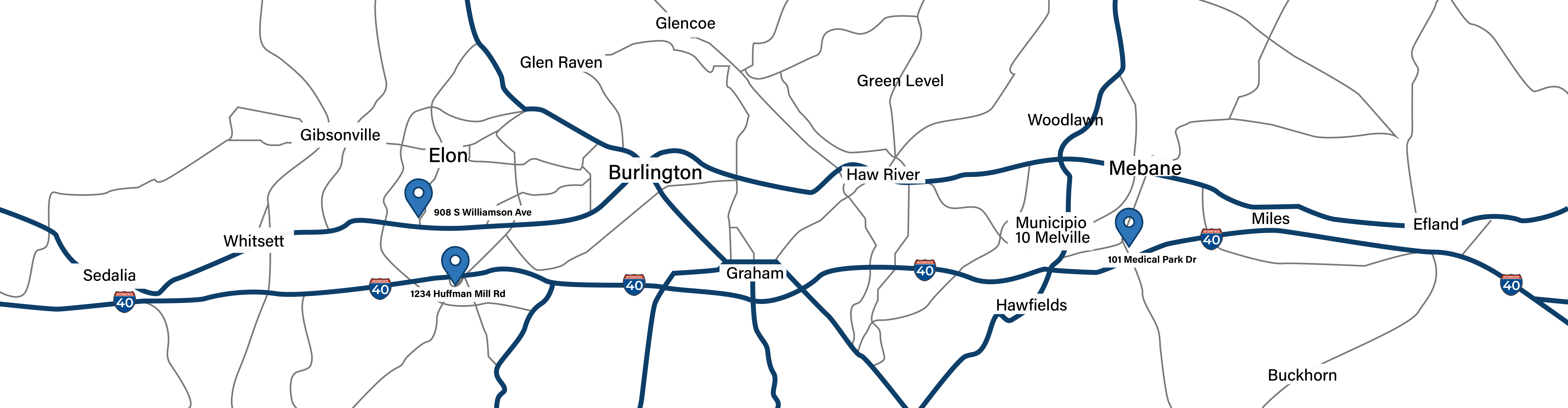
Kernodle Clinic has skilled podiatric surgeons that are able to perform many different types of bunion surgeries to address your specific condition. Our podiatrists are focused on correcting your bunion deformations and helping you live a healthier more comfortable life. For more information on our podiatry services or to set up an appointment, contact us at our Burlington, NC or Mebane, NC offices.